



Madrid | Issue #164 | The Bubble is Spain's #1 English-language newsletter. We offer paid and free subscriptions (which you can customize). For sponsorships, click here.
🗳️ Have we got some great election conspiracies for you!
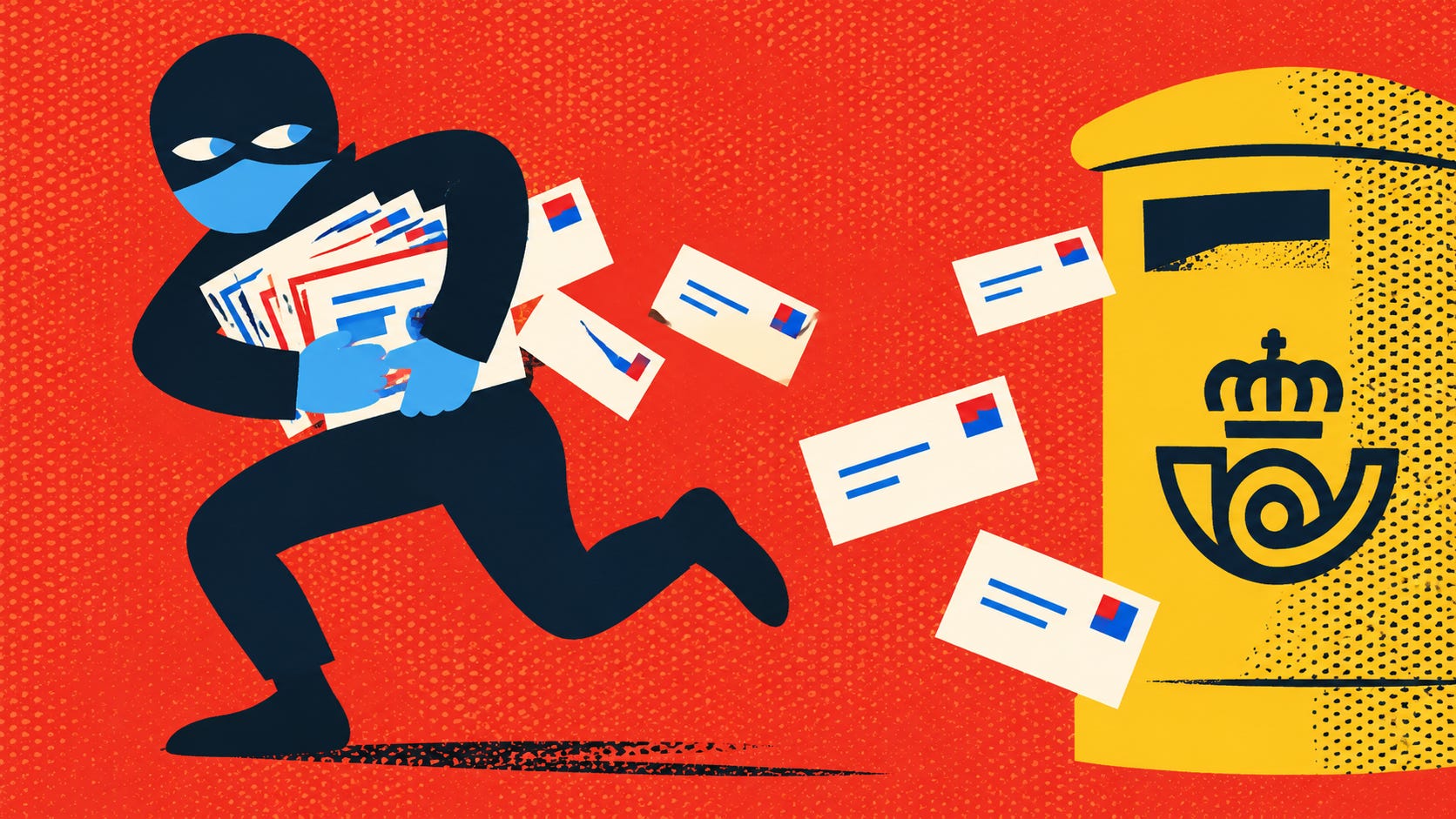
Spain’s Nov. 29 parliamentary election campaign doesn’t start until Nov. 13. But the “pre-campaign” — a.k.a. dumb season — is already underway. And wow, is it ridiculous.
Dumb season? Yup, that’s when parties trot out their most outlandish conspiracy theories. This election’s fashion: voter fraud, discarded ballots, and the “grandchildren’s law,” which gives citizenship to hundreds of thousands of descendants of Spaniards who left during the Civil War and Franco’s regime.
The main purveyors are the opposition parties — the right-wingers expected to take power after the polls close. Why? Maybe nerves. Maybe they want to whip up their base. Maybe they actually believe it.
Stop the (alleged) steal! The big scare-monger is that PM Pedro Sánchez is trying to stuff the voter rolls. Remember the Ley de Nietos (grandchildren’s law), passed with broad support in 2022, which granted citizenship — and the right to vote — to grandchildren of Civil War and Franco exiles? In September, the Supreme Court temporarily suspended the right to vote of those who became citizens under the law unless they could prove their descent from exiles, after Vox challenged an instruction from the Justice Ministry (overseen by Sánchez's government) that presumed anyone who left Spain between 1936 and 1955 to be an exile, potentially opening the citizenship route to a much wider pool of descendants.
Which, in theory, shows Sánchez is desperate to find PSOE voters… anywhere. PP boss Alberto Núñez Feijóo says blocking the new voters is about protecting electoral integrity, not denying citizenship to Spanish descendants.
Feijóo accuses Sánchez’s government of stretching the law to let in anyone with a distant Spanish ancestor — presumably to swell the rolls with grateful sanchistas. Maybe?
Feijóo also promised PP monitors at every polling station on Nov. 29, saying the party was prepared after so many “tricks,” “coercions,” “manipulations,” “sewers” and “kickbacks” (oh, do tell!). He urged Spaniards not to be fooled, framing the election as a choice between changing the government and plunging into “the abyss of Sánchez.” Subtle!
A little help from their friends? Spain’s Constitutional Court (which leans left) is unlikely to intervene before election day to possibly overturn the Supreme Court’s decision.
Judges from both its left and right wings apparently agree that the court cannot normally intervene while Supreme Court proceedings are ongoing. The Sánchez government is reportedly considering asking Spain’s Ombudsman to file a constitutional appeal, but success doesn't look likely
And that wasn’t the first election conspiracy theory. It followed another, very Trumpy one: that mail-in votes couldn’t be trusted.
Madrid regional president (aka la presi) Isabel Díaz Ayuso (PP) began casting doubt on mail-in voting immediately after Sánchez called snap elections, saying, “I ask everyone not to even think about voting by mail,” in a nod to the nefarious deeds that could be committed by the man she called the “most amoral president in history.”
Vox leader Santiago Abascal, aka the Far Right Freddie Mercury, urged people to vote in person the same day, warning that Sánchez might “manipulate this electoral process” because “we all know he is capable of absolutely anything.”
There are, of course, reasons for distrust. Take one: Sánchez appointed a longtime socialist apparatchik to head the national polling institute, where he apparently just invents numbers that favor Sánchez’s PSOE. Its latest poll showed the PSOE leading the PP by 12 points, while most others give the PP a mid-single-digit lead.
But cooking the polls is a far cry from setting ballots on fire.
More news below. 👇👇

Are you an American living in Spain? You can vote in U.S. elections from here! If you’re an eligible U.S. citizen, request your ballot now at VoteFromAbroad.org and choose to receive it by email. Once it arrives, complete and return it promptly, following your state’s instructions and deadlines. Need help? The website offers state-by-state guidance and support from voter assistance volunteers. Request your ballot here.
🎙️ A new episode of The Bubble Podcast is out!
In this new (short and sweet) episode, we have a one-on-one chat with journalist Juanma Lamet, and we discuss the elections and Ceuta. Subscribe and listen on Spotify, Apple Podcasts, and YouTube!
💬 Five things to discuss at dinner parties
1. 🤦♀️ Spain's leftists can't stop bickering, and that could be their doom
Ego battles. With Spain’s snap elections scheduled for Nov. 29, the parties to the left of Pedro Sánchez’s Socialists are running out of time to form a united front. The deadline to register electoral coalitions is tomorrow and, instead of joining forces, they’re busy arguing over who should be in charge.
All your base are belong to us (ha!). There are currently two competing alliances within the left.
On one side, far-left Podemos and the Catalan separatist party ERC have struck a deal that will see their leading figures, Irene Montero and Gabriel Rufián, campaign together.
On the other, Izquierda Unida, Más Madrid, Comuns, and Movimiento Sumar have formed a new coalition called Frente Amplio (Broad Front), with former Barcelona mayor Ada Colau as their proposed candidate for prime minister.
The good news for them? Both alliances say they want unity. The bad news? Each wants the other to join its team.
Can they all get along? Colau certainly hopes so. The former Barcelona mayor, who governed the city from 2015 to 2023, has even offered to step aside as a candidate and change Frente Amplio’s name if that helps bring Podemos on board.
The awkward part. Just an hour after her remarks, Frente Amplio officially launched its new branding, website, and social media accounts, complete with a fresh vermilion-and-lime color scheme. (So much for keeping the name negotiable.)
Why so divided? Beyond disagreements over candidates and electoral lists, Podemos wants open primaries to decide who gets nominated, while parties within Frente Amplio favor negotiated agreements that protect their regional power bases.
Podemos leader Ione Belarra has invited other parties (including the Frente Amplio) to join the alliance with ERC, while Montero has rejected joining Frente Amplio as it currently stands. Colau, meanwhile, insists she cannot imagine a united candidacy without Montero.
Why is a single ticket so important? According to most polls, a united left is expected to perform badly on election day. And if they are divided? Even worse.
Spain’s electoral system rewards parties that concentrate their votes, particularly in smaller provinces where relatively few parliamentary seats are up for grabs. If two left-wing alliances compete separately, they could split their support and end up winning fewer seats than they would together.
While the PP and Vox are predicted to win a broad parliamentary majority, Spanish elections are unpredictable, and every seat could matter (just look at the 2023 results that kept Sánchez in power). If it hopes to have any influence, the left will have to find a way to stop fighting itself before Friday.
2. 🇪🇸 Ceuta Crisis, Pt. 2: Moroccan warships and a royal visit
October surprise. Just when you thought the crisis between Spain and Morocco couldn’t get any more complicated… bam! We learn that Moroccan warships entered Spanish waters during the massive migrant crossings into Ceuta this summer… and the Spanish government knew about it all along.
Aggressive action. You’ll remember that on July 30 and 31, more than 70,000 migrants crossed from Morocco into the Spanish enclave of Ceuta. What you didn’t know, however, was that at least one Moroccan frigate and several patrol boats also entered Spanish territorial waters without authorization.
The incursions reportedly continued into early August, prompting Spain to deploy naval vessels. At one point, Spanish and Moroccan boats nearly collided (yikes).
Why are we only hearing about this now? PM Sánchez confirmed the incidents this week, after the story broke, but downplayed their significance, arguing that occasional maritime incidents happen between neighboring countries.
King Felipe VI (aka F6) had also been informed and chaired a meeting with senior military officials in September to discuss the crisis.
Morocco’s responsibility for the crossings is still unproven, but these revelations raise more questions. (Their presence in Spanish waters during the crisis makes the possibility of state involvement harder to dismiss. The Spanish government, however, insists the naval movements were not coordinated with the crossings).
Enter the King and Queen. Against this backdrop, F6 and Queen Letizia made a historic visit to Ceuta on Tuesday and Melilla on Wednesday, becoming the first Spanish monarchs to visit the two North African cities since 2007.
The trip was intended to show solidarity with residents and reaffirm Spain’s sovereignty over the territories, which Morocco has long claimed as its own.
F6 didn’t mince words. The King described the mass border crossings as a violation of Spain’s frontier, insisted that Spanish sovereignty and territorial integrity were nonnegotiable, and promised Ceuta’s residents: “We will not leave you alone or defenseless.”
F6 also had a message for Morocco, calling for relations between the two countries to be based on mutual trust, responsibility, and “good faith.”
3. 🚨 Spain’s biggest hash trafficker arrested in Morocco
We can’t tell you if this will make your drugs more expensive. But we can tell you that Juan Carlos T.B., known as “Moreno” and considered Spain’s biggest hash trafficker, has been picked up by The Man in Morocco, ABC reports, citing police sources.
Here’s the 411. The National Police’s organized-crime unit reckons Moreno ran the most powerful hashish distribution network in the country. The investigation has so far netted more than 10 arrests and over 10 tons of product.
Washing that cash. Moreno’s money allegedly got laundered through ARTECAR Soluciones Gráficas, a graphic design firm run by one Juan Andrés González Santos. Never heard of him? You’ve probably heard of his wife: Verónica Hidalgo, Miss España 2005.
Wait, Miss España? Yes, love. Hidalgo, a Costa Brava girl, took the crown in 2005, competed at Miss Universe in Thailand, did a stint on the island reality show Supervivientes, and later reinvented herself as a nutrition and fitness coach. Then she married into González Santos’s graphic design empire. Which allegedly is very lucrative.
Creative payroll management. According to police reports seen by ABC, the firm allegedly paid fake salaries to gang members, including one since 2017. At least one of the “employees” met the boss in bars, restaurants, and each other’s homes, produced
tons ofno discernible cutting-edge graphic design, and occasionally joked about his imaginary job.Need cash? On the encrypted app Sky ECC, González Santos allegedly told associates to just send his company an invoice. “Advertising” was a popular line item.
Home sweet home with a government assist. A flat where one gang member lived was registered to the firm and bought with a state-backed ICO loan. Police say it was really paid for in drug cash.
Dude is multi-talented. Police say Hidalgo’s other half also resold hash himself, and was promised a 30-kilo bale for helping find a trucker willing to run the Tangier–Algeciras route for €60,000 a trip.
Pro tip for aspiring traffickers. González Santos deleted his messages. His associates did not.
González Santos has been in pretrial detention since April. Hidalgo, who says she has no doubts about her man’s innocence, has taken refuge in their young daughter and her family, though gossip outlets report she has been called before a judge herself.
4. 🚄 AVE train turns into a post-apocalyptic fireball in the middle of nowhere
Ever dreamed your butt was on fire and tried to run away from it but couldn’t? Well, even if you never have, that pretty much describes what Madrid-to-Catalonia AVE passengers experienced on Monday.
WTF⁉️ The rear engine of a Madrid-Figueres AVE caught fire near Ricla, Zaragoza, at 4 p.m. — peak return traffic from the National Day holiday weekend. The 283 passengers on board were evacuated safely, though firefighters had to haul hoses up a 50-degree, 40-metre slope to reach the train (god bless the firefighters). The cause is unknown and, obviously, under investigation.
We are not reassured. The train, a 34-year-old Alstom Series 100, had recently passed its inspections, Renfe says.
The rear engine wasn’t even providing traction at the time. It just... caught fire.
Adif cut power to the overhead lines and shut both tracks for four hours. By the time service partially resumed, nearly 20,000 passengers had been affected across 33 Renfe trains, plus 11 Iryo and 3 Ouigo services. Many didn’t reach their destinations until after midnight.
The next day wasn’t much better. The burned-out engine is still sitting on the tracks, reducing 25 kilometres of Spain’s busiest rail corridor to a single track at 80km/h — against a normal operating speed of around 300km/h. Renfe, Iryo and Ouigo all cancelled or merged services Tuesday and Wednesday; delays of up to two and a half hours were reported.
No removal date has been set. Really? Removing the wreck is, Renfe says, “complex due to difficult terrain access” and can only happen in narrow windows between commercial trains. 🤦
And because it’s in the middle of nowhere.
5. ⚽ ¡Gol! Netflix gets the rights to broadcast stream the 2030 World Cup
Move over, Stranger Things. Netflix’s next big blockbuster in Spain will be the 2030 FIFA World Cup. The streaming giant announced this week that it has acquired the exclusive broadcasting (or is it streaming?) rights for the tournament in Spain and Andorra, marking a major shift in how people here watch the world’s biggest sporting event.
A huge f*cking deal. The 2030 World Cup will be big, as it will celebrate the tournament’s 100th anniversary, with Spain, Portugal, and Morocco serving as the main hosts.
Weirdly, Argentina, Uruguay, and Paraguay will also host special centenary matches, because reasons. A total of 48 national teams will compete in 104 games, all of which will be streamed live on Netflix.
But wait, what if I don’t have Netflix? We have good news! You won’t need a subscription to watch Spain play.
Netflix will partner with a free-to-air television network (yet to be announced) to broadcast every match involving the Spanish team, both semifinals, and the final.
There will also be one free match per matchday, although we still don’t know the details of how viewers can access it.
What if I already have Netflix? Do I need to pay extra? That’s the million-euro question. The company hasn’t revealed whether the tournament will be included in existing subscriptions or require an additional payment. 😒
For comparison, DAZN charged a one-time fee of €19.99 to watch all 104 matches of the 2026 World Cup. A small price to pay for many hours of football joy and probable heart attacks!
Money, money, money. Live sports are becoming the latest battleground for streaming platforms looking to attract and retain subscribers. Netflix has already experimented with NFL games, boxing, wrestling, and tennis, but broadcasting an entire World Cup is a much bigger ordeal.
Streaming live sports comes with challenges. Unlike traditional television, internet broadcasts can lag behind the action, meaning you might hear your neighbors celebrating a goal before it appears on your screen (or vice versa).
The times, they are a-changin’. (Google it, kids!)
🔔 Don’t forget to follow us on Instagram!
If you’re not following us on Instagram yet, you’re missing out. We’re posting exclusive content with our collaborators across Spain, breaking news updates, and pop culture coverage. Click on the post above and come hang with us!
🙏 Once again, please remember to share this newsletter with your friends on social media. The more we grow, the more information we’ll be able to offer each week.